Religious Freedom Imbizo still leaves matters outstanding

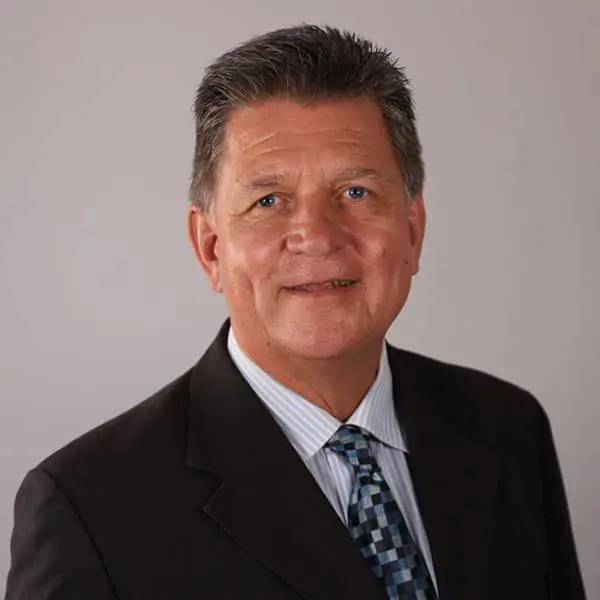
Michael Swain, Executive Director, FOR SA
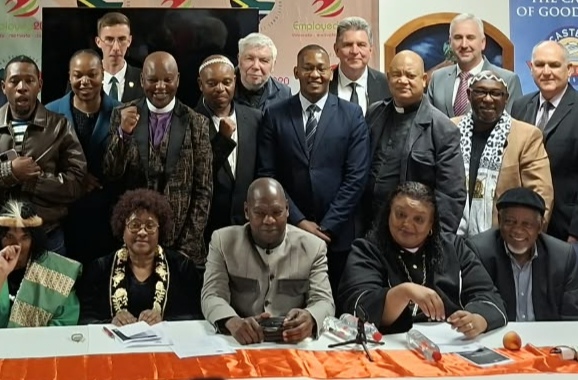
On Saturday 3 October 2026, Dr Zweli Mkhize, Chairperson of Parliament's Portfolio Committee on Cooperative Governance and Traditional Affairs (COGTA), travelled from KwaZulu-Natal to meet faith leaders at the Castle of Good Hope. The Religious Freedom Imbizo was not a parliamentary hearing, but he attended with the Speaker's knowledge and mandate. He listened to every speaker and answered questions candidly, which deserves acknowledgement.
Every submission he heard that day opposed the process run by the Commission for the Promotion and Protection of the Rights of Cultural, Religious and Linguistic Communities (CRL Commission) through its Section 22 Committee for the Christian sector.
The question in any event reaches beyond any one faith. Should a body created by the Constitution to protect religious communities help design a system to register, oversee and sanction them?
What Dr Mkhize said
Dr Mkhize told the Imbizo that the CRL Commission has no mandate to create legislation and that "any talk of legislation" should be removed from this process. He accepted that co-opting objectors onto the Committee, under criteria the CRL Commission proposed in writing, including recognising "the need for appropriate legislative support", would bind them to a process they reject. In reply to a question from the floor, he said: "I do agree: it is not about State regulation of the Church."
Spoken, but not yet written
These statements are welcome. However, they were made orally, not in writing, and none of the governing documents has been publicly amended. The Terms of Reference still require consultation on "the development of the legislative framework" for a religious practice council. The December 2025 Draft Framework still proposes compulsory registration, a public register, a "Seal of Good Standing" and sanctions up to "deregistration and public notification", with a final framework due to Parliament in May 2027.
Legislation has been set aside from this process, Dr Mkhize said, but he did not say it has been ruled out for good. Removing legislation from one process is not the same as taking it off the table. The prospect of an Act of Parliament, as envisaged in the CRL Commission's own documents, lies at the heart of the widespread resistance.
Why so little has changed
Why, then, has so little changed? The power to form or dissolve a Section 22 committee rests with the CRL Commission, and the Portfolio Committee must not be seen to override it. Parliament's legal team is examining how the Committee was formed and whether the Terms of Reference "already predetermine that there shall be legislation". The Portfolio Committee says it cannot pronounce until that opinion arrives, which he said has already been delayed more than once. That caution is understandable. Yet the hearings continue, and Dr Mkhize said he believes "the process is on course". Meanwhile the Committee goes on building a record, and in time a report, under Terms of Reference that Parliament's own lawyers are examining.
The code of conduct already exists
The real hope lies in the code of conduct. Nobody in this debate disputes that abuse in religious settings must be met with the full force of the law. The question is who should set and own ethical standards for faith communities. FOR SA reminded Dr Mkhize that the Portfolio Committee recommended in 2018 that the sector develop a code of conduct. A consultative process duly produced a code that was completed in 2019, presented to COGTA in 2020, and has since been placed before the Portfolio Committee, the CRL Commission and the Section 22 Committee.
Dr Mkhize said he had not known of it, but added: "At the end we will want to ask the question: 'What happened to the code of conduct?'" He said there is "no objection to having a code of ethical conduct driven, drawn, managed, controlled, monitored by religious leaders". A code of that kind already exists. What remains highly contentious is a code enforced through structures established by an Act of Parliament.
Not a minority view
Although a member of the Section 22 Committee has told the Portfolio Committee that the objections come from a minority, the record suggests otherwise. The Southern African Catholic Bishops' Conference has said that imposed codes, or registration with a state entity, "are unacceptable". SACOFF, representing more than 25,000 churches, opposes "direct or indirect State regulation of religion". The Apostolic Faith Mission has taken a similar position, and the South African Council of Churches, an observer on the Section 22 Committee, has spoken of "deep-seated unease".
Beyond the Christian sector, Chief Rabbi Goldstein has set out his objections to the Portfolio Committee, and the Inkululeko Yesizwe Association, which says it represents millions of followers of African traditional spirituality, the South African Hindu Maha Sabha and a number of Islamic bodies have raised their own. No source has been produced for the CRL Chair's claim that the Section 22 Committee represents 45 million Christians. The International Institute for Religious Freedom puts the bodies the CRL Commission lists at about 26 million adherents.
A less restrictive way forward
Where rights are limited, section 36 of the Constitution requires the limitation to be justified, and asks, among other things, whether less restrictive means could achieve the same purpose. In FOR SA's view, they already exist: the criminal law, laws of general application including those that establish the child protection and sexual offences registers, and a code written by the faith community, for the faith community.
One, two and three
Dr Mkhize also offered an invitation: "Do not be shy to say, 'We are not satisfied because one, two and three remain outstanding.'" We take him at his word.
One: confirm Saturday's assurances in writing, and formally withdraw the legislative mandate in the Terms of Reference. Two: pause the hearings while Parliament's lawyers advise on whether the Committee was lawfully formed. Three: let the sector's existing code be the starting point, owned and run by faith communities, without a statutory council, register or licensing power. We also ask Parliament to require a full budget and cost-benefit analysis, particularly as the CRL Commission has established similar committees for other faith communities.
Dr Mkhize said he sees the few things that remain as "within our capacity to resolve". We agree. Listening was the first step. Putting it in writing is the next.